Maine kelp, stabilized on the pier. Less methane from the herd.
We turn fresh sugar kelp into a shelf-stable cattle feed supplement the same day it comes off the boat, putting idle lobster boats to work in the spring and cutting agricultural methane year-round.
“Reduce agricultural methane emissions by transforming underutilized maritime infrastructure into a scalable, shelf-stable feed industry.”
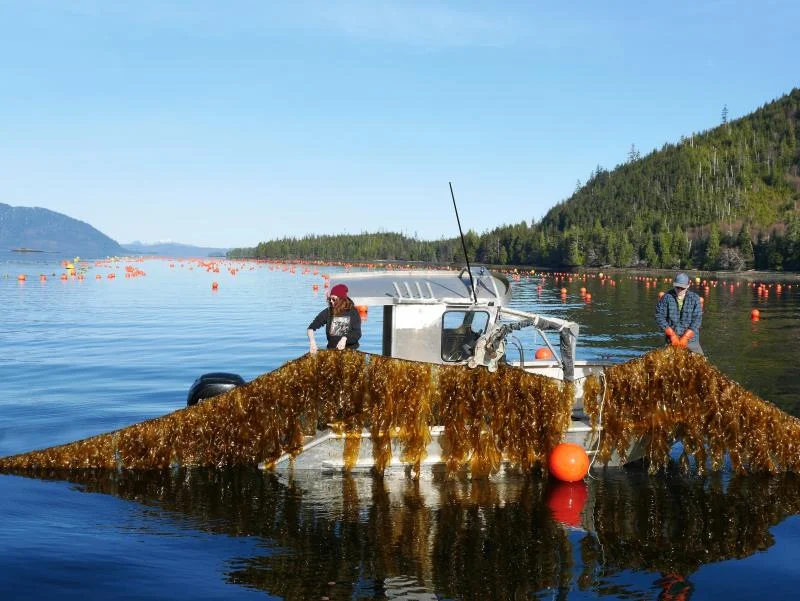
Maine grows world-class kelp. Most of it can't make it to market.
Maine has the coastline, the boats, and the people to be a major player in the global seaweed market. What it lacks is a way to keep a highly perishable harvest from going to waste.
Raw sugar kelp begins breaking down within about two days of harvest.
The spring harvest window is short, creating a surge existing processors can't absorb.
of harvested kelp can spoil before it is processed, which limits how much fishermen can farm.
Same day. No fridge.
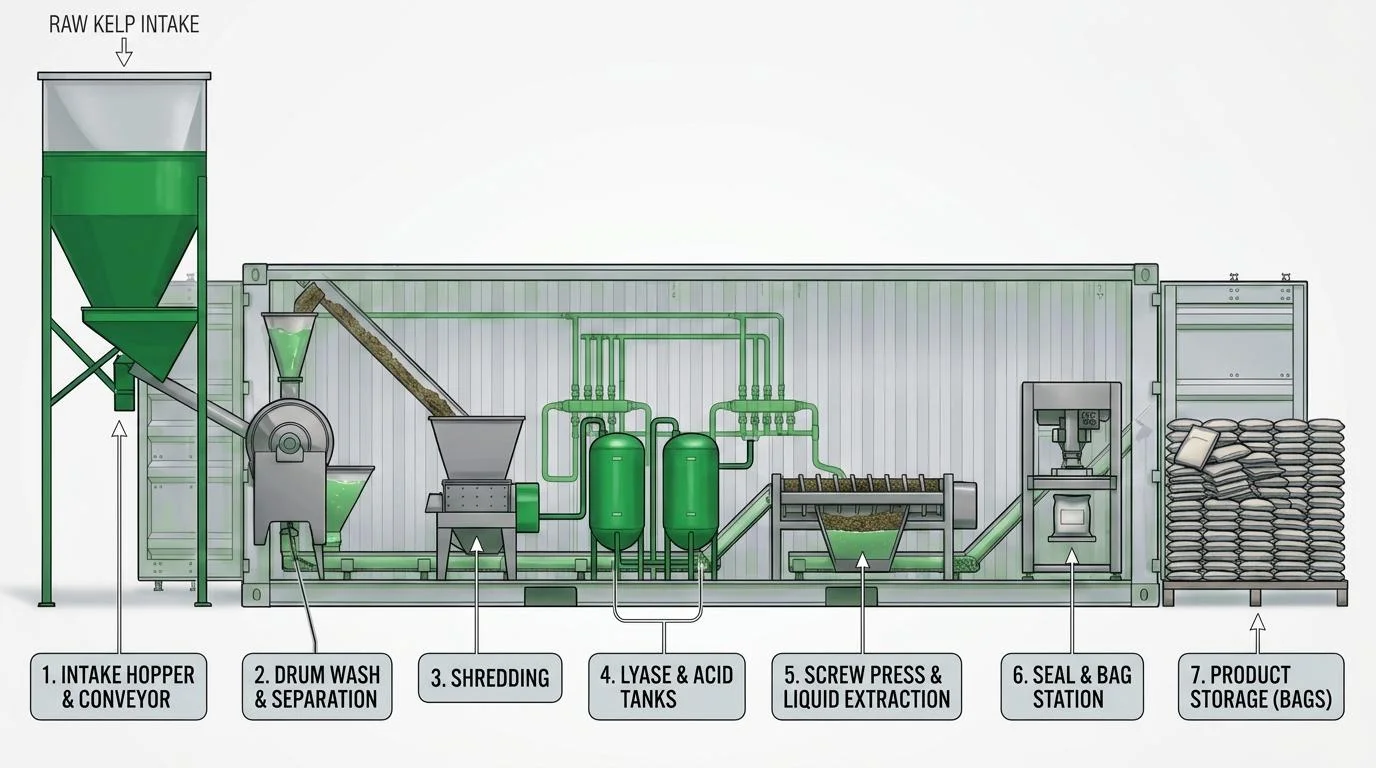
Mobile, container-based processing units sit right at the pier. Kelp is washed, shredded, stabilized, pressed, and bagged the day it's harvested, turning a 48-hour product into a shelf-stable ingredient that can be sold year-round.
Harvest
Maine fishermen harvest sugar kelp with idle lobster boats during the spring off-season, adding a new source of income.
Stabilize on the pier
Our container unit washes, shreds, doses, presses, and bags the kelp on-site, with no central plant and no cold chain.
Feed
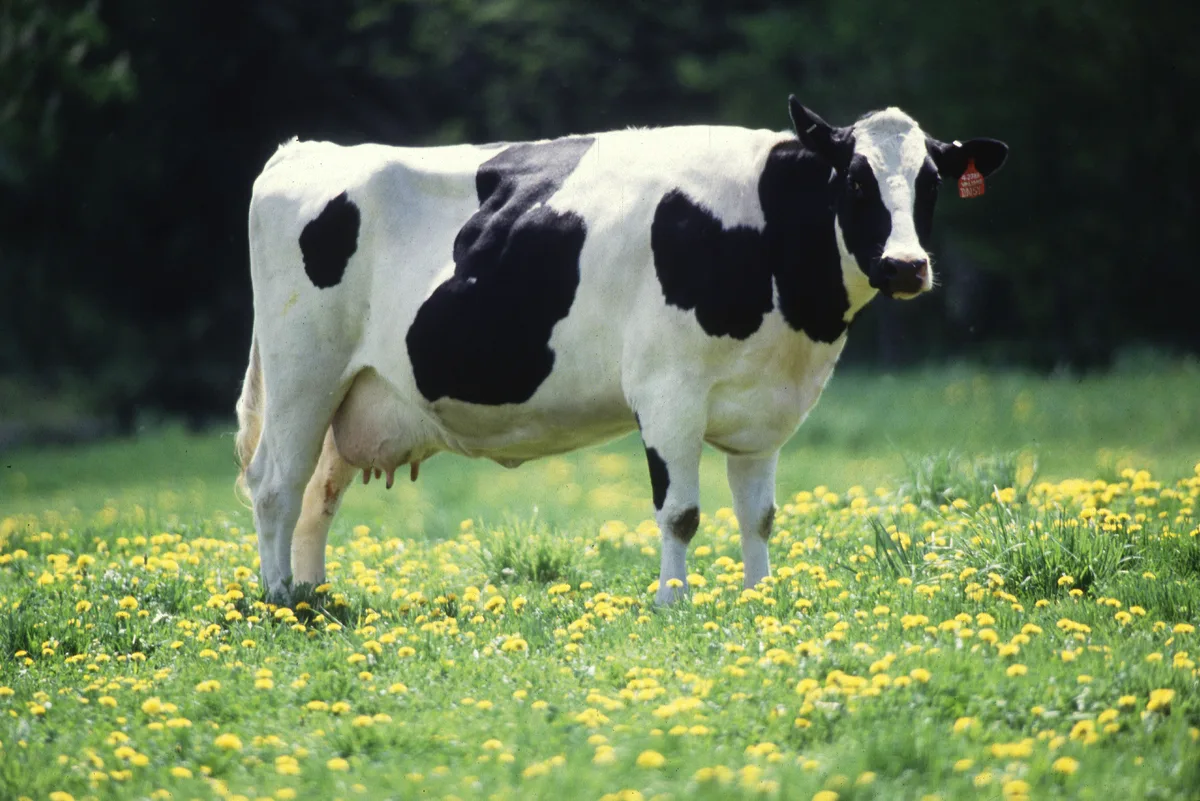
Shelf-stable kelp cake goes to cattle herds as a feed supplement at 0.5–1% of feed by volume.
Why kelp in the feed trough matters
Cattle are among the world's largest sources of methane. Certain seaweeds can dramatically reduce the methane cattle produce during digestion.
Upper-bound potential based on the ~80% methane suppression shown in vivo for bromoform-rich seaweed. Maine's native kelp delivers roughly 14% of that ceiling today (≈308 MMT). Sources below.
Built with Maine's fishermen and farmers
We're building the supply chain from the water to the barn, and we're looking for partners at every step.
Fishermen & kelp farmers
Put your boat to work in the spring off-season. We buy your kelp and process it right at the pier, so less of your harvest goes to waste.
Talk to us about supply →Dairy & cattle producers
A shelf-stable kelp feed supplement from right here in New England, designed to reduce enteric methane from your herd.
Join our pilot interest list →Investors & partners
We're raising to build our first pier-side processing unit. Let's talk about bringing shelf-stable Maine kelp to market.
Start a conversation →Jeremy Matsumoto
Jeremy founded Maine Kelp Company to connect Maine's working waterfront with the feed industry, building the processing infrastructure that lets fishermen grow more kelp and helps farmers cut methane from their herds.
Let's talk kelp.
Whether you fish, farm, invest, or write about any of it, we'd like to hear from you. We reply to every message.